
Growing Sideways in New England
Why Noah Kahan Matters
There are certain artists you find, and then there are artists who feel like they’ve been waiting for you. I don’t remember the exact moment I heard Noah Kahan, but I remember the feeling that came with it. It was a strange mix of recognition and discomfort, like someone had managed to articulate something I had been carrying without ever quite naming. It didn’t feel like discovery as much as it felt like being understood, and not just in a general sense, but in a way that felt tied to a place, to a region, to a way of existing that is difficult to explain unless you have lived within it.
Musical artists to me have rarely spoken to me in a way Noah Kahan’s music did, so upon hearing it, it was life changing. That is not hyperbole, either. It really did change who I am.
Kahan’s story, at least on the surface, is not unfamiliar. He grew up in Vermont, in a small town that sits within the broader cultural landscape of New England, a place defined as much by its beauty as by its isolation. That matters, not simply as a biographical detail, but as a lens. Because when you listen to his music, it does not feel like someone writing about New England from a distance. It feels like someone who has lived within its rhythms, who understands its silences, who knows what it means to grow up in a place where the environment shapes not just your surroundings, but your interior life. And that is where his music begins to take on a different kind of weight.
Living in New England is not just about geography. It is about atmosphere. It is about the way time feels during the winter months, when days shorten and nights stretch longer than you want them to. It is about the quiet that settles into small towns, where everything slows down just enough for your thoughts to become louder than usual. It is about the unspoken expectation that you endure, that you carry things without necessarily putting them into words, because that is simply how people here have learned to live. There is a certain kind of restraint that defines this region, and over time, that restraint becomes internalized.
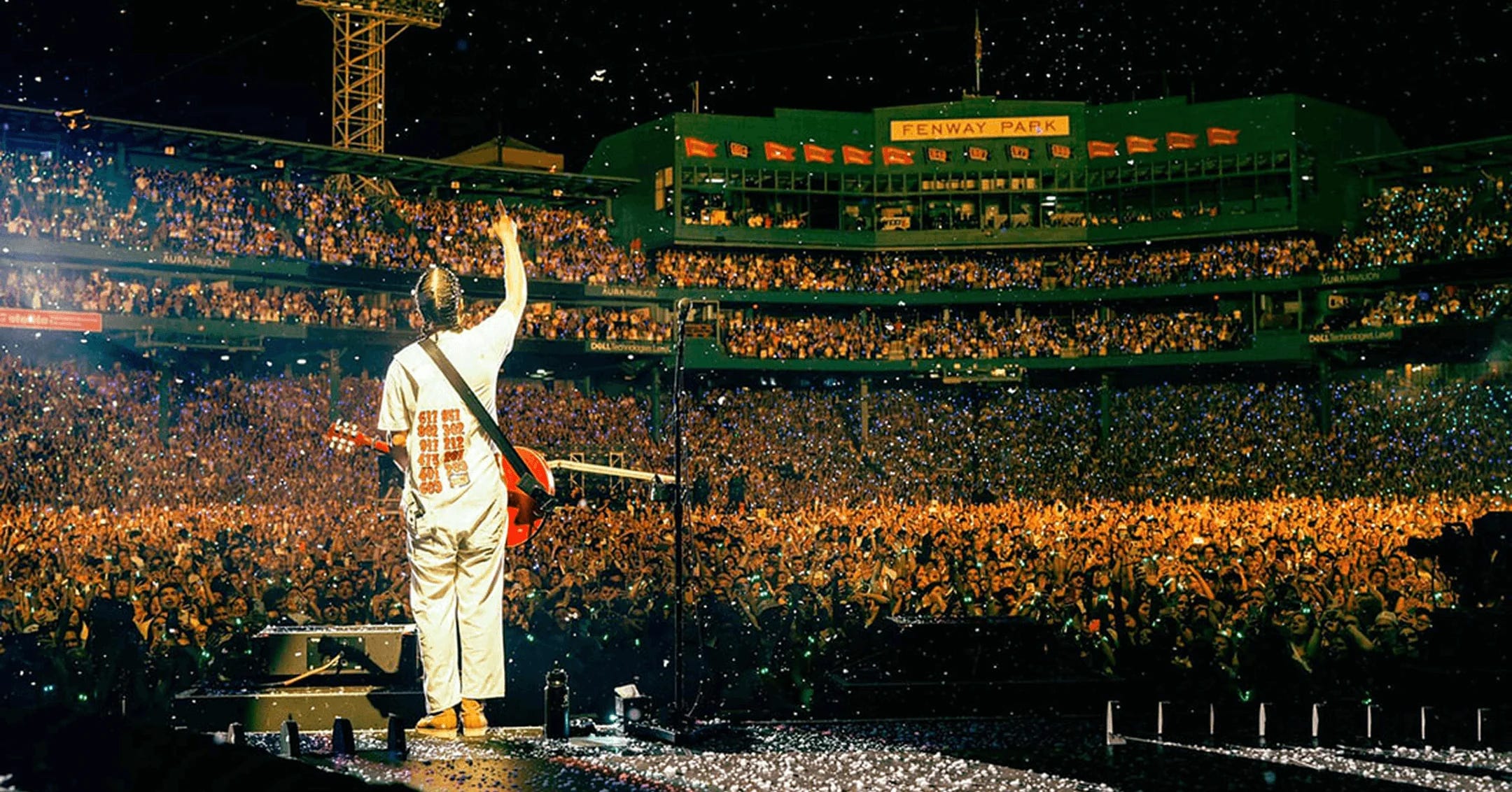
What Kahan does, and what makes his work feel so influential to me, is that he gently pushes against that instinct without completely abandoning it. He does not turn inwardness into spectacle. He does not dramatize it beyond recognition. Instead, he gives it language, and in doing so, he makes something visible that is often left just beneath the surface. Listening to his music feels like stepping into a space that is already familiar, but seeing it more clearly than you ever have before.
When I listen to “Homesick,” I am not just hearing a reflection on place. I am hearing a tension that feels deeply embedded in what it means to be from somewhere like this. The idea that home is not a fixed point, but something complicated, something that can simultaneously pull you back and push you away. There is something unsettling about that realization, because it forces you to confront the possibility that leaving does not necessarily free you from the influence of where you come from. If anything, it makes you more aware of it. What does it mean to feel homesick for a place that you once needed distance from?
That question lingers in a way that feels unresolved, and maybe that is why it feels so honest. Because there is no clean answer. There is only the recognition that home is not just a location, but something that exists within you, something that follows you whether you want it to or not.
“Maine” carries a different kind of weight, one that feels quieter but no less significant. There is a stillness to that song that feels almost geographic, as if the landscape itself is shaping the emotional tone. You can picture the coastline, the gray sky, the cold air, but what stays with you is not just the imagery. It is the distance that runs through it. Not just physical distance, but emotional distance.
The kind that develops slowly, almost imperceptibly, until suddenly it is there and you are not entirely sure how it formed. It makes me think about how often we allow distance to grow, how often we avoid difficult conversations, how often we convince ourselves that time will resolve things that we are not ready to confront. In a region where people are often more comfortable sitting with things than addressing them directly, that distance can become part of the fabric of everyday life.
Then there is “Growing Sideways,” which feels like one of the most quietly devastating songs he has written. The idea of growth that is not linear, not upward, not forward, but sideways, is such a simple shift in language, but it reframes everything. It suggests that movement does not always equate to progress, that change does not always bring clarity, and that time does not always lead to resolution. That is an uncomfortable idea to sit with, because it raises a question that feels both personal and universal. What if you are not becoming who you thought you would be?
Not in a dramatic sense, not in a way that feels like failure in the traditional sense, but in a quieter, more persistent way. The sense that you are moving through life, that things are happening, but you are not entirely sure what it is all building toward. In a place like New England, where life can feel cyclical, where seasons repeat and routines settle in, that feeling can become amplified. It is easy to confuse stillness with stability, to assume that because things are not changing rapidly, they must be secure. But they are not always the same.
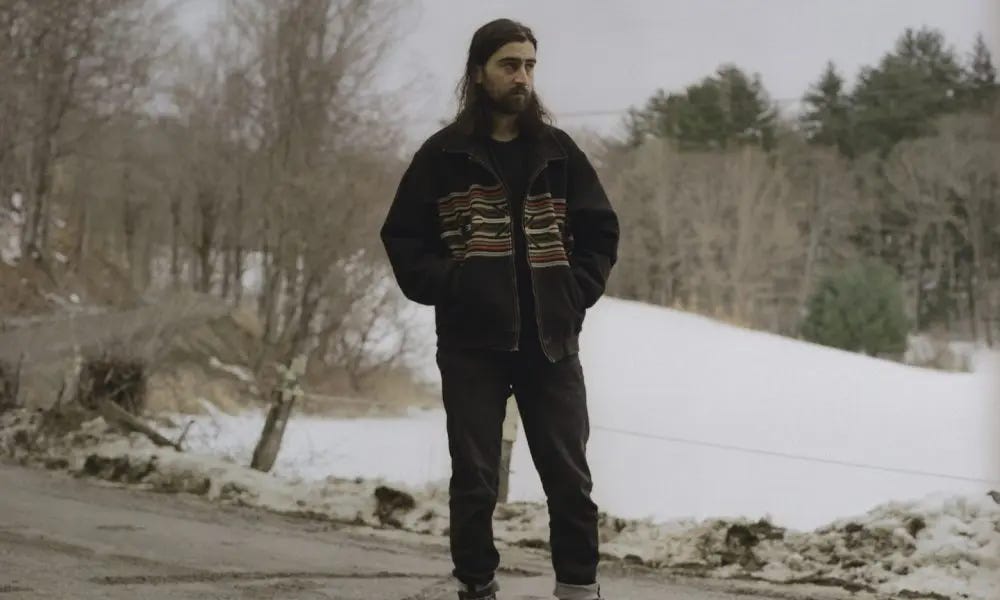
“The Great Divide” from his next album feels like stepping back and looking at all of this from a distance. There is something in that song that feels broader, almost collective. It is not just about individual experience, but about a shared sense of disconnection, a gap between expectation and reality that feels increasingly difficult to bridge. It makes me think about how many people are navigating that same space, how many are quietly grappling with the distance between who they thought they would be and who they have become and how often that struggle goes unspoken.
But what elevates all of this, what makes his work feel even more significant, is the way he approaches mental health, not as a theme he occasionally returns to, but as something woven into the foundation of his music. It is not presented as a singular struggle or a dramatic turning point. It is constant, ambient, and often quiet, much like the region he writes from.
There is something distinctly New England about the way mental health exists here. It is present, often deeply so, but rarely announced. It shows up in small ways, in withdrawal, in humor, in deflection, in the tendency to keep moving even when something feels off. There is an unspoken understanding that you manage it, that you carry it, that you do not always make it visible. Kahan challenges that without completely breaking from it.
There is a difference between hearing someone talk about mental health and hearing someone articulate a thought you have had but never said out loud. The latter carries a kind of weight that is difficult to replicate, because it does not just inform you. It reveals something about yourself.
I find myself thinking about how many people everywhere are navigating similar internal landscapes, how many are dealing with the same quiet heaviness, the same uncertainty, the same sense of being slightly out of step with where they thought they would be. And I wonder how often those experiences go unnamed, how often they remain internal because there is no language readily available to express them. Noah Kahan provides that language. Not in a way that resolves the struggle, but in a way that acknowledges it, that makes it visible without turning it into something it is not. He allows it to exist as part of everyday life, which, in many ways, is what makes it feel so real. That is where his influence extends beyond music.
When something that has been internalized for so long is suddenly articulated, it shifts the way you think about it. It makes it harder to ignore, but it also makes it easier to understand. It creates a space where reflection feels possible, where honesty feels less isolating. That kind of impact is subtle, but it is significant.
What Kahan does across all of these songs is not resolve these tensions. He does not offer solutions or easy answers. Instead, he allows them to exist, and in doing so, he gives them legitimacy. He makes it feel acceptable to sit in uncertainty, to acknowledge it without immediately trying to move past it. That, to me, is where his influence becomes most meaningful.
In a place like New England, where there is often an unspoken expectation to endure, to keep moving without necessarily explaining why something feels difficult, that kind of honesty feels significant. It does not disrupt the culture in a loud or dramatic way. It shifts it quietly, by making space for reflection, by giving people the language to articulate what they might otherwise keep to themselves. That kind of shift, even if it is subtle, matters.
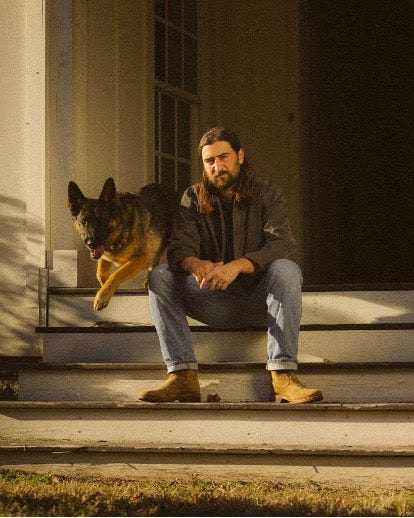
I find myself returning to his music not because it provides comfort in the traditional sense, but because it provides recognition. It reflects something back to me that feels real, something that might otherwise remain unarticulated. And in that reflection, there is a different kind of comfort, one that does not rely on resolution, but on understanding. It also makes me think more deeply about the relationship between place and identity. How much of who we are is shaped by where we come from? And how much of that remains, even when we try to move beyond it?
Would his music feel the same if I had grown up somewhere else?
It is a question I keep returning to, and I am not sure there is a clear answer. But I suspect that part of what makes his music resonate so deeply is not just the themes he explores, but the specificity of the lens through which he explores them. It feels rooted in something tangible, something geographic, but also something emotional that is harder to define. Maybe that is what makes it so powerful.
With a new album on the horizon, there is a sense of anticipation that feels layered with all of this. It is not just excitement for new music, although that is certainly part of it. It is curiosity. It is the question of where he goes from here, whether he continues to explore this same emotional landscape or begins to move beyond it.
If there is one thing his music makes clear, it is that place is not just a backdrop. It is something that exists within you, shaping the way you think, the way you feel, the way you understand yourself, even when you are not consciously aware of it; in New England, where so much is felt but not always said, having someone put words to that experience matters. It matters more than we often realize.
In the end, I do not think Noah Kahan’s influence comes from spectacle or even from innovation in the traditional sense. It comes from recognition. From the ability to take something that feels deeply personal and reveal the ways in which it is also shared. From the willingness to sit in the quiet, to examine it, and to give it shape without trying to rush past it. His music does not just soundtrack this place. It helps explain it.
And for those of us who have spent our lives trying to understand what it means to be from New England, that kind of explanation feels invaluable.
Maybe that is where this becomes most personal for me, because at a certain point, this stops being about analysis or interpretation and becomes something much simpler. I love Noah Kahan’s music not just because it is well written or emotionally resonant, but because it arrived at moments when I needed it without fully realizing that I did. There have been times when his songs have sat with me in ways that nothing else quite could, giving shape to feelings I did not have the language for and, in doing so, making those moments feel a little less isolating. It is one thing to hear music that sounds good. It is another to hear something that feels like it understands you.
So there is a level of gratitude that comes with that, one that feels difficult to fully articulate but important to acknowledge. Because while his music may be rooted in a specific place, its impact reaches far beyond it, into the lives of people who find pieces of themselves within it. I am one of those people. And for that, for the honesty, for the recognition, and for the quiet way his music has helped me move through moments I did not always know how to navigate, I am genuinely thankful. I cannot wait for his next album in April.