
Are Books Getting Worse?
Every generation seems convinced that its reading culture is in decline. In the eighteenth century, critics worried that the rise of the novel would erode intellectual discipline. In the twentieth, mass-market paperbacks were dismissed as diluted versions of “serious” literature. Today, that same anxiety has resurfaced in digital form, often framed through a deceptively simple question: are books getting worse?
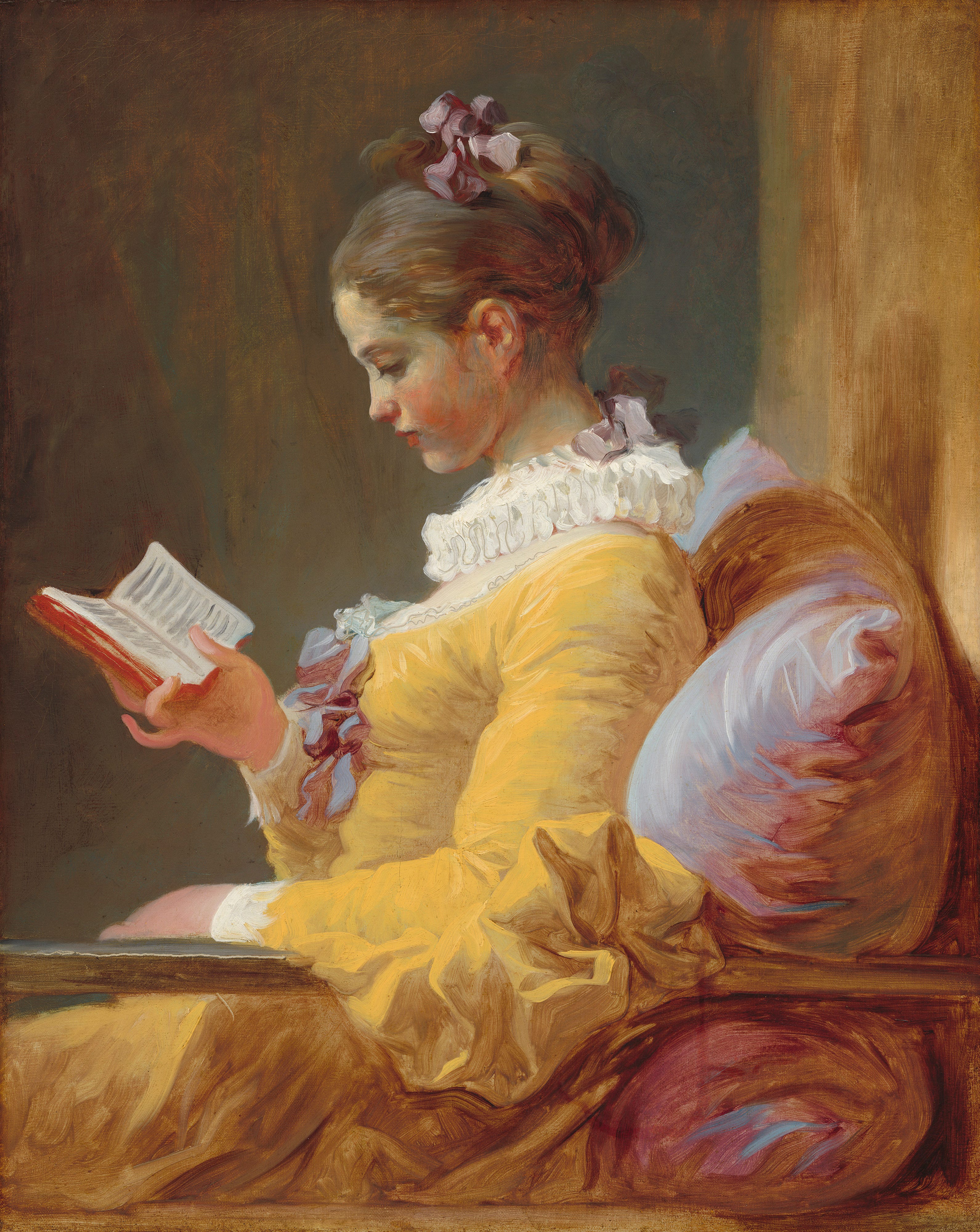
The question feels new, but its structure is deeply familiar. It emerges most forcefully in moments of transition, when the conditions of reading shift in visible ways and when those shifts are interpreted as loss. What is distinctive about the present moment is not the existence of the question, but the scale and speed with which it circulates. It appears in comment sections, across reading platforms, and in conversations shaped by the constant churn of digital culture. It gains traction because it feels intuitively true.
Many readers can point to books that seem rushed, repetitive, or overly shaped by trends. Others point to changes in reading habits themselves, shorter attention spans, faster consumption, and a desire for immediate clarity. These observations are not entirely unfounded. Something has changed. But identifying change is not the same as proving decline.
Jared Henderson, a YouTuber who has a PhD in philosophy, recently published a video called “Are Books Getting Worse?” which was not only the impetus for this article, but offers a useful starting point for thinking through this tension. Henderson’s central argument, as I interpret it, is not that readers are wrong to notice shifts in literature, but that they are often comparing two fundamentally different things. The present, with all of its variety and unevenness, is measured against a past that has already been filtered, curated, and refined by time. This insight reframes the question in an important way. The issue is not simply whether books are getting worse. It is whether we are remembering the past accurately.
To understand why this matters, it is helpful to look at the longer history of reading. The anxiety surrounding novels in the eighteenth century provides a striking example. At the time, novels were often viewed with suspicion. Critics worried that they encouraged escapism, emotional excess, and intellectual laziness. Reading fiction was seen, in some cases, as a moral risk. This concern feels distant, even exaggerated, but its structure is recognizable. The fear was not just about content. It was about how people were reading, what they were choosing to engage with, and what those choices suggested about broader cultural values.
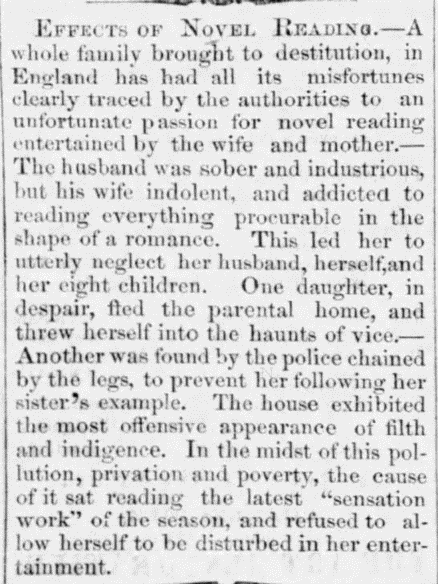
The nineteenth century introduced a different version of the same concern. Advances in printing technology made books cheaper and more widely available. Serialized fiction flourished, which expanded literacy amongst the population. For many, this represented a profound cultural shift, one that brought reading into everyday life on an unprecedented scale. But not everyone celebrated this change. Critics argued that the expansion of print culture diluted literary quality. Too many books, they suggested, made it harder to distinguish between what was valuable and what was not. The problem, in their view, was not just quantity, but accessibility itself. The image below shows how 20th century presses felt about women reading novels, and their eventual impact on their morality:
These historical moments are not identical to the present, but they share a common pattern. Each reflects a moment when reading became more widespread, more accessible, and more visible. Each produced concerns about declining quality. And in each case, those concerns were tied not only to literature itself, but to broader changes in how people engaged with it. This pattern complicates the modern claim that books are getting worse. It suggests that what we are experiencing may not be a unique decline, but a recurring response to change.
Henderson’s argument builds on this by introducing what might be called a survivorship problem. When we look at the past, we do not see everything that was published. We see what has endured. The works of Jane Austen, Charles Dickens, and George Orwell remain visible not because they were typical, but because they survived. What we do not see are the countless books that were widely read in their time but later forgotten. Their absence creates a powerful illusion. The past appears more refined, more consistent, and more serious than it actually was.
The present offers no such illusion. It is immediate and unfiltered. Readers encounter everything at once, from critically acclaimed novels to books that will disappear within a few years. This visibility can make contemporary literature feel uneven, but that unevenness has always existed. What has changed is our ability to see it. At the same time, the way readers discover books has shifted dramatically. Platforms such as TikTok have introduced new forms of literary conversation. Books can gain attention quickly, often driven by emotional reactions, aesthetic appeal, or relatability. These systems reward immediacy. A book that captures attention early is more likely to circulate widely.
This can create the impression that literature is becoming more superficial, but that conclusion overlooks an important point. These same platforms have also expanded access. They have introduced readers to authors, genres, and ideas they might never have encountered otherwise. They have made reading more social, more visible, and more participatory. Henderson talks about I Who Have Never Known Men, by Jaqueline Harpman is an intense novel about women who are underground and guarded by men and have never seen the outside before. It is a brilliant novel, but only recieved wide acclaim a couple of years ago thanks to BookTok and other outlets. Henderson notes that he only bought it because it was under his local bookstores “Staff Recommendation” list, which was no doubt inspired by social media.
“The book is not the important part. The book is the delivery system. The important part is the story.”
Stephen King
It is at this point, however, that the conversation begins to shift in a more serious direction. While many of the changes in reading culture reflect long-standing historical patterns, one development stands apart in its potential impact. The growing presence of artificial intelligence is beginning to reshape not just how books are discussed, but how they are approached in the first place. Tools such as ChatGPT make it possible to summarize texts, extract themes, and generate interpretations instantly. What once required sustained attention and careful reading can now be bypassed with minimal effort. This is not simply a matter of convenience, it alters the relationship between reader and text.
Reading, at its core, is not just about information. It is about process and involves working through complexity, sitting with uncertainty, and allowing meaning to develop over time. Difficulty is not an obstacle to reading, but it is often what makes reading meaningful. AI disrupts that process. It provides answers before readers have had the opportunity to ask their own questions. It encourages movement away from the text rather than deeper engagement with it. In doing so, it reinforces the broader cultural shift toward speed and efficiency, but with far greater force. Unlike earlier tools such as summaries or study guides, AI operates with immediacy and authority. It does not simply assist reading, it replaces important parts of reading. When interpretation is readily available, the incentive to engage deeply diminishes.
This has implications for attention. If readers become accustomed to receiving condensed interpretations, their tolerance for ambiguity and complexity may weaken. Books that require sustained effort can begin to feel unnecessarily difficult, not because they are worse, but because the habits required to engage with them are under pressure.
This is where the perception of decline becomes particularly misleading. The frustration that readers feel is real, but it is often misdirected. It is not that books have become worse. It is that the conditions of reading have shifted in ways that make certain kinds of books harder to engage with.
The issue, then, is not that people are no longer reading. It is that reading looks different. Modern reading culture is shaped by speed. Readers often expect engagement quickly. If a book does not capture attention early, it is set aside. At the same time, there is a lingering expectation that books should be finished, that abandoning a text is somehow a failure. This creates a tension that readers push through books they do not enjoy, reinforcing the idea that contemporary literature is unsatisfying.
Closely tied to this is the desire for clarity. Many readers want texts that are immediately understandable, thematically clear, and emotionally direct. There is nothing inherently wrong with this preference, but it can shape expectations in ways that limit engagement with more complex works. Books that require patience, ambiguity, or sustained attention may feel out of place.
Those books still exist, perhaps now more than ever. Contemporary literature includes authors such as Colson Whitehead and Donna Tartt, whose work demands careful reading and deeper interpretation. These authors are not exceptions. They are part of a broader landscape that includes a wide range of styles, genres, and levels of complexity.
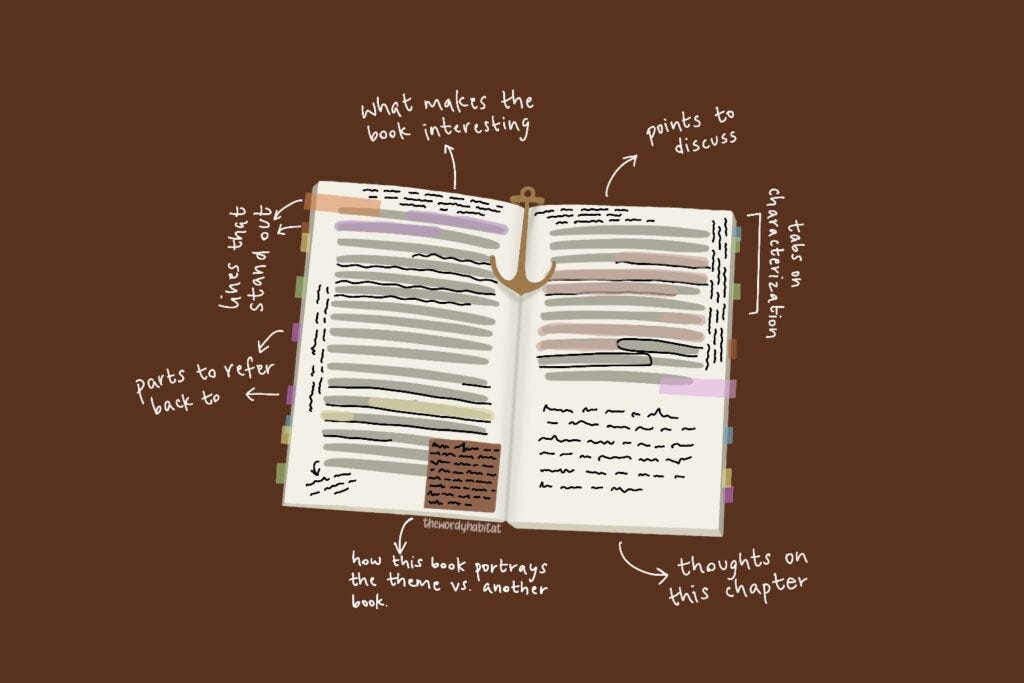
The persistence of this range is important. It suggests that literature itself has not diminished, even if the conditions surrounding it have changed. The claim that people are not reading anymore often accompanies concerns about declining quality. This claim has been repeated for decades, often without clear evidence. Reading has not disappeared, but evolved. Readers engage with texts in multiple formats, including physical books, digital editions, and audiobooks. They discuss what they read in ways that are more visible than ever before. This visibility can create the impression of superficiality, but it also reflects engagement. People are still reading. They are still forming opinions and participating in conversations about literature.
The persistence of those conversations suggests something important. The concern that books are getting worse is not a sign that reading is disappearing. It is a sign that people still care deeply about what they read.
So, are books getting worse?
The answer is more complicated than a simple yes or no, but the evidence points in a clear direction. Books are not uniformly declining in quality. What has changed is the context in which they are written, distributed, and read. The present feels uneven because we experience it in real time, without the benefit of hindsight. The past, by contrast, feels stable because it has already been filtered. Only a small portion of what was written remains visible. That filtered past becomes the standard against which the present is judged. When viewed through this lens, the perception of decline begins to shift. It becomes less about literature itself and more about how we encounter it. The question is not whether books are getting worse, but whether we are comparing them fairly.
Reading is not going anywhere. It is changing, adapting to new technologies, new audiences, and new forms of engagement. People are still reading. They are still discussing books. They are still asking questions about quality and meaning. If anything, the persistence of those questions suggests continuity rather than decline. The conversation has not disappeared. Books are just being read in a different world.
Nice analysis. One point I think is overlooked often is that not all reading is in books. There are many other types of reading material now that usually go unmentioned in the whole “reading is declining” conversation. Just a thought.